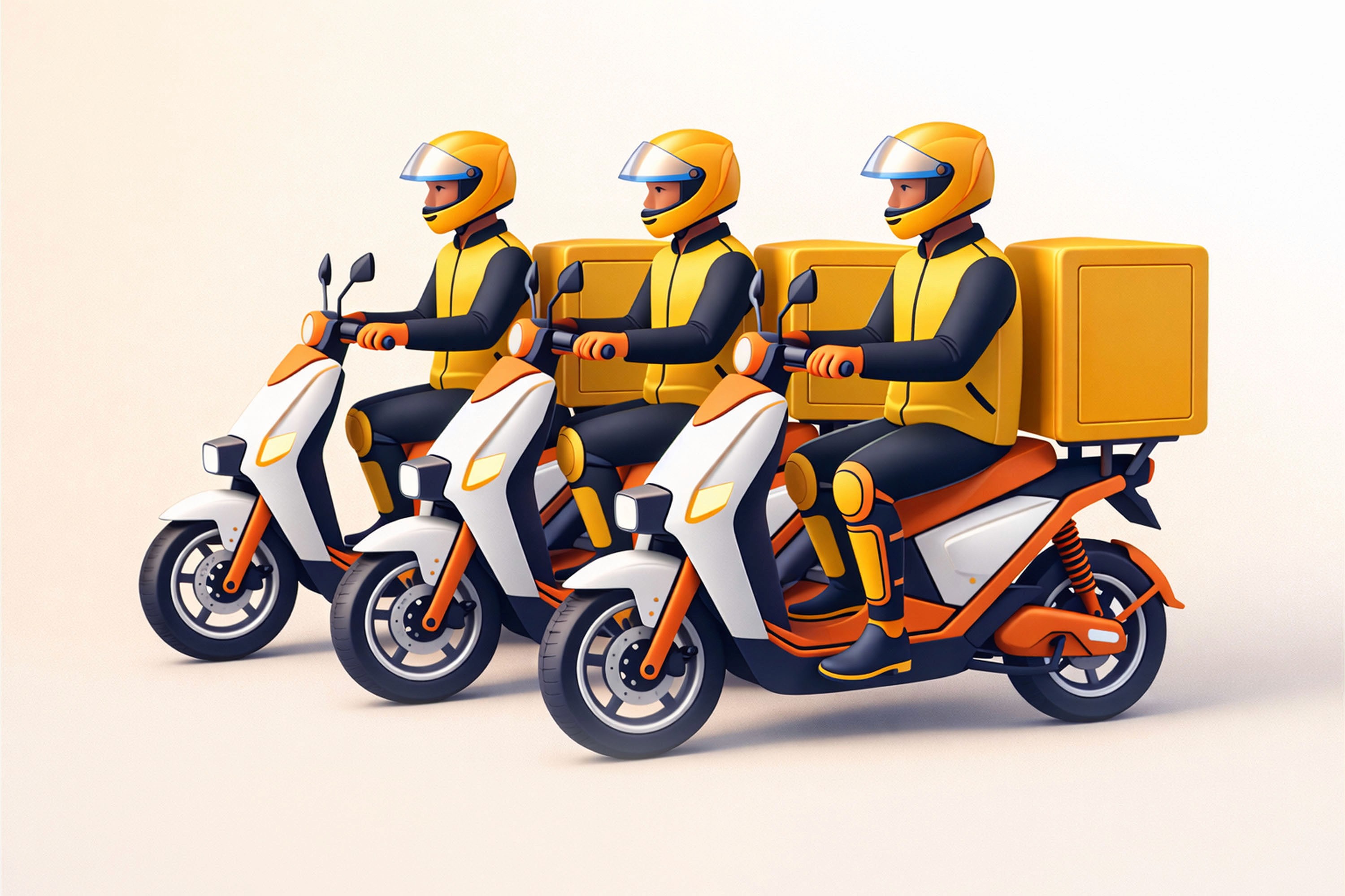
Managing a food delivery fleet is fundamentally different from managing any other type of delivery operation. The perishable nature of the product, the tight delivery windows expected by customers, and the high volume of orders during peak hours create a level of complexity that generic logistics software was never designed to handle. Food delivery fleet management requires a specialized approach that accounts for temperature sensitivity, kitchen preparation times, rider behavior, and the financial pressures unique to the food industry.
The Core Challenges of Food Delivery Fleet Management
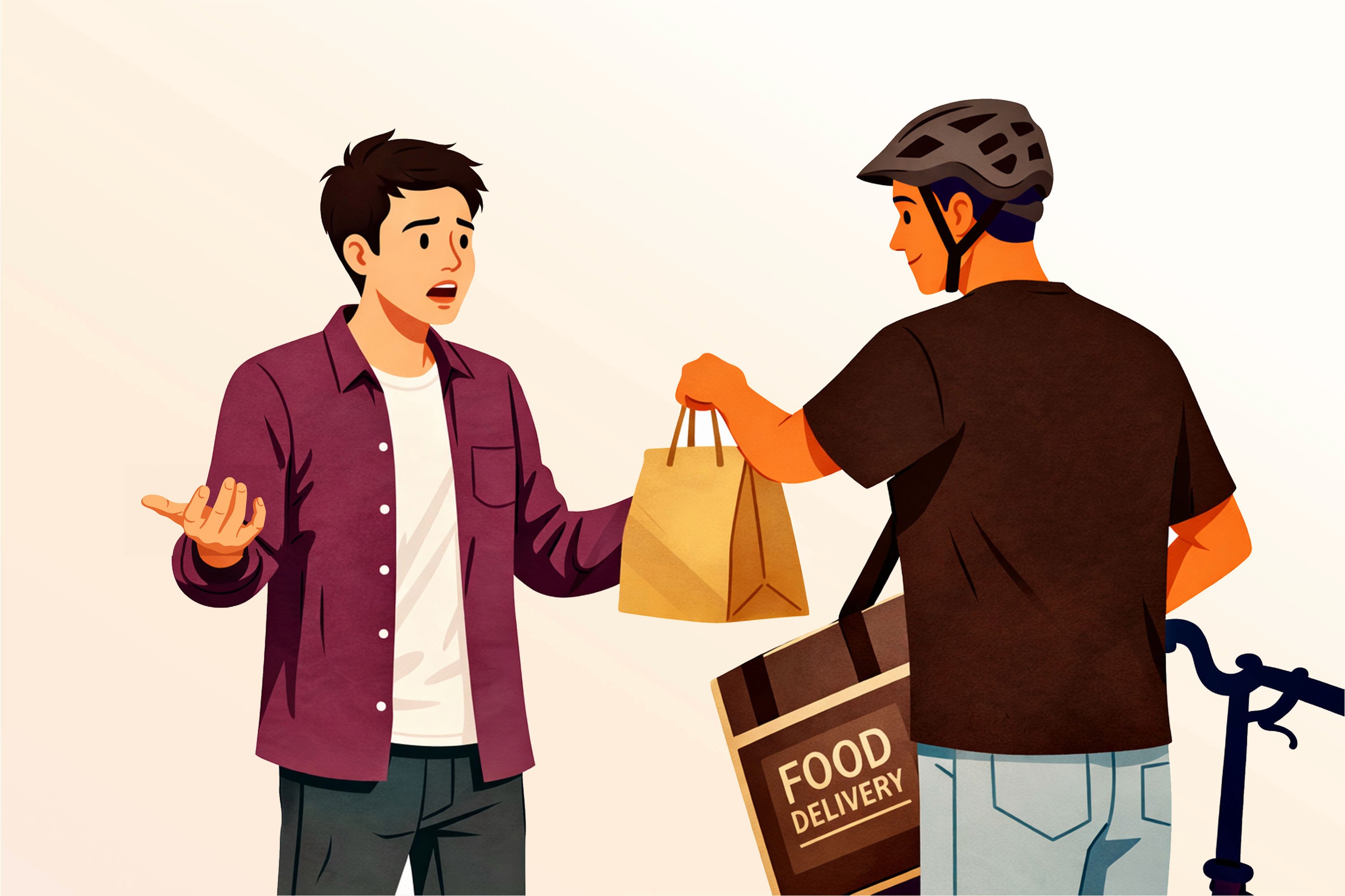
The primary challenge in food delivery fleet management is speed. Customers expect food to arrive hot and fresh, usually within 30 to 45 minutes. Every extra minute adds risk: the food cools, the customer's patience wears thin, and the likelihood of a return or complaint increases. But speed alone is insufficient if it comes at the cost of efficiency. Sending one rider per order is fast but unsustainable from a cost perspective. Grouping too many orders together saves on rider costs but leads to late deliveries.
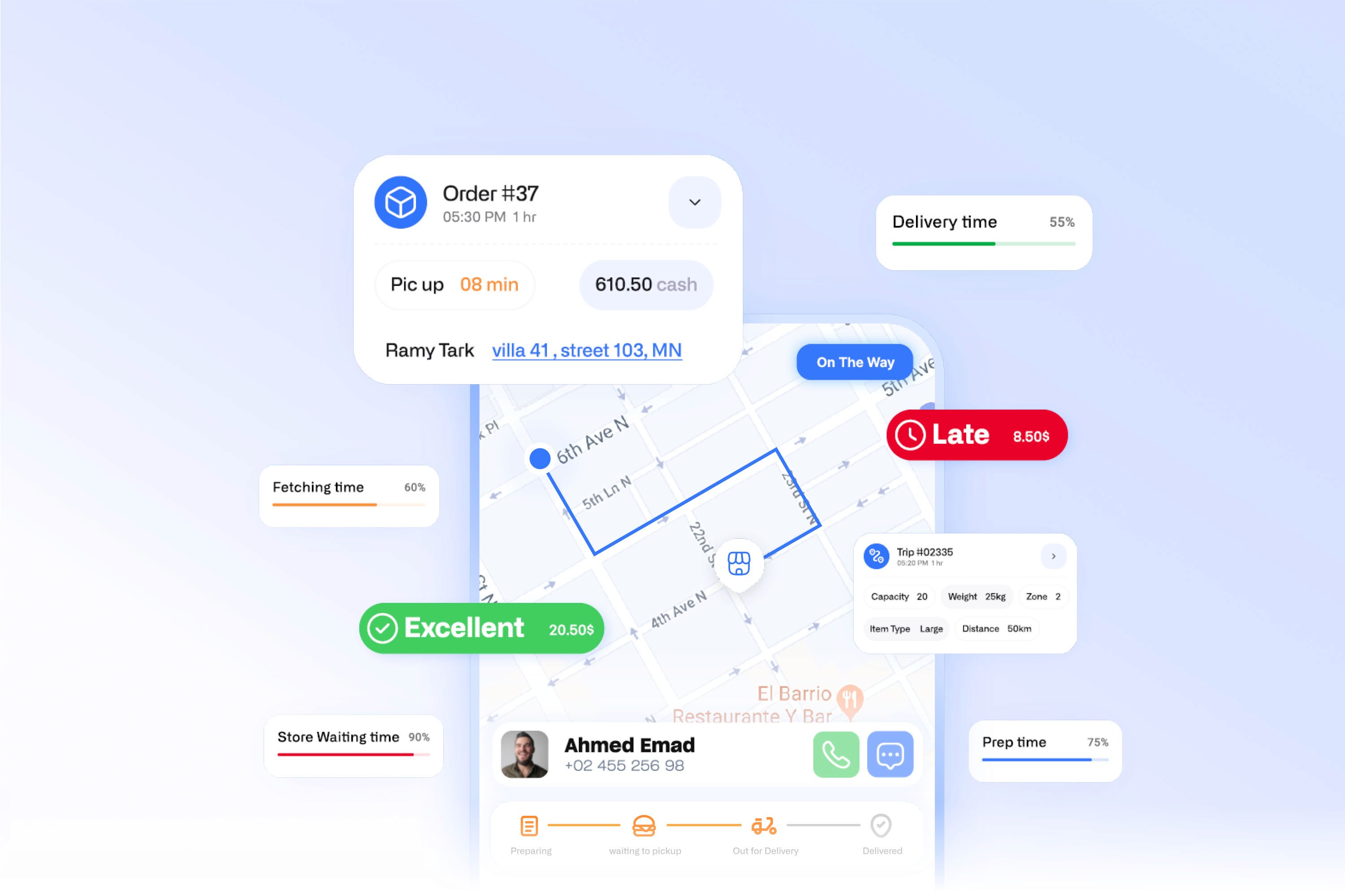
The second challenge is visibility. In a manual operation, the fleet manager knows where riders are only when they call in or when a customer complains. Real-time tracking is essential, but tracking alone is passive. Effective food delivery fleet management requires a system that actively monitors rider behavior and flags issues before they become customer-facing problems.
Automating Fleet Management Decisions for Food Delivery
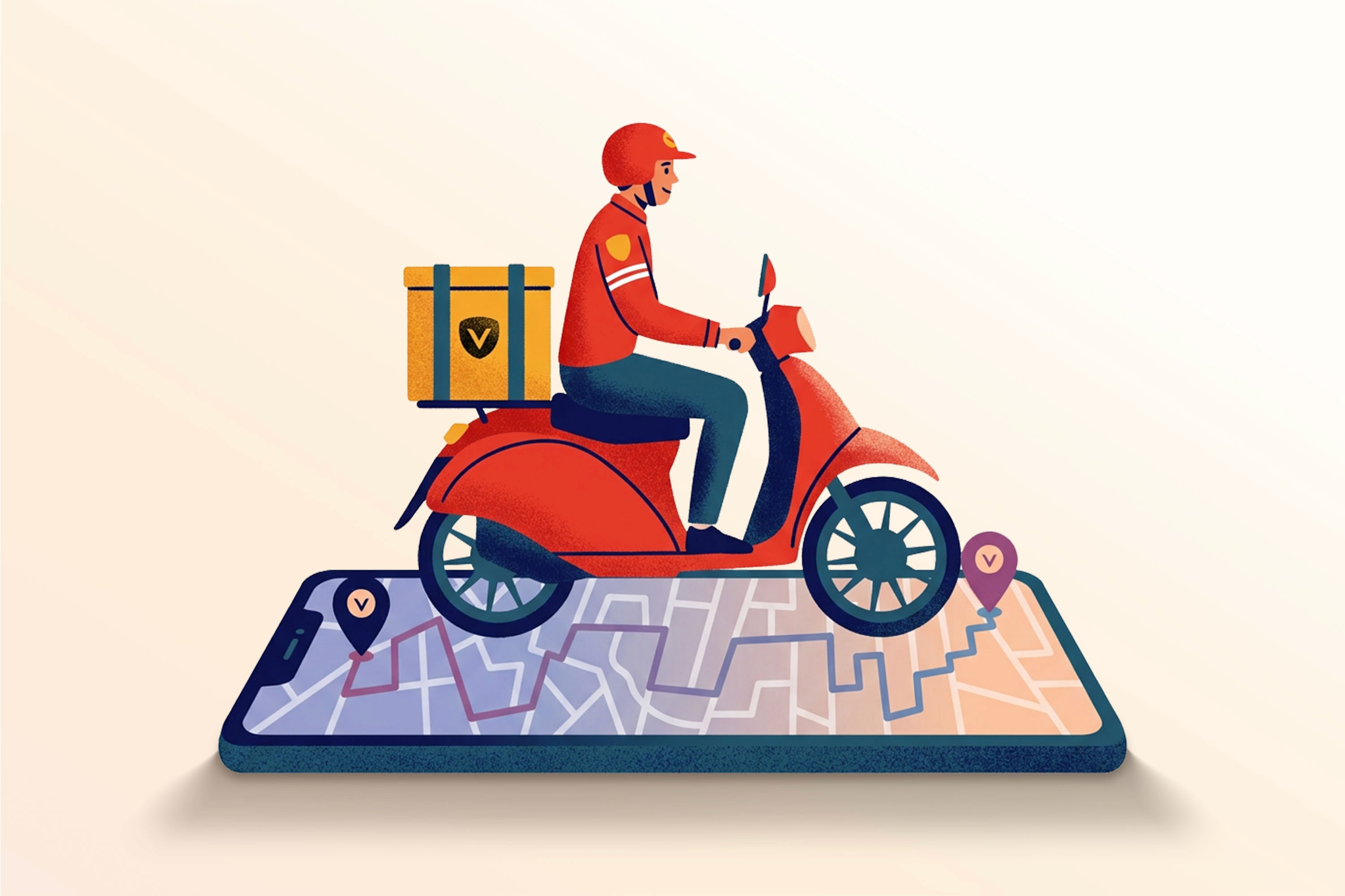
Automation in food delivery fleet management starts before the rider even leaves the store. The system must evaluate incoming orders, determine optimal groupings based on destination proximity and item compatibility (hot versus cold, large versus small), calculate the best route, and assign the trip to the most suitable available rider. All of this must happen within seconds of the kitchen marking the order as ready.
Roboost automates this entire sequence. Its grouping logic prevents hot and cold items from sharing a trip. Priority automation ensures that high-value orders, VIP customers, and orders with previous complaints are dispatched first. Rider skills matching ensures that an order going to a hotel gets a rider with appropriate language skills. These granular decisions, made automatically thousands of times per day, are what separate professional food delivery fleet management from ad hoc logistics.
Controlling Rider Behavior in Food Delivery Fleet Management
Rider behavior has a direct impact on delivery quality. Riders who exceed their trip capacity, take unauthorized breaks, or complete deliveries without actually reaching the customer erode both margins and reputation. A food delivery fleet management system must enforce operational boundaries through technology, not just through policy.
Features like geofenced shift start and end, GPS verification at pickup and delivery, IMEI-locked rider apps, and automated fraud detection ensure that every action is verified. Abused trips are automatically excluded from performance metrics, so your data remains clean and trustworthy. This level of control is what allows businesses to scale their fleet without proportionally scaling their supervisory staff.
Measuring and Improving Food Delivery Fleet Management
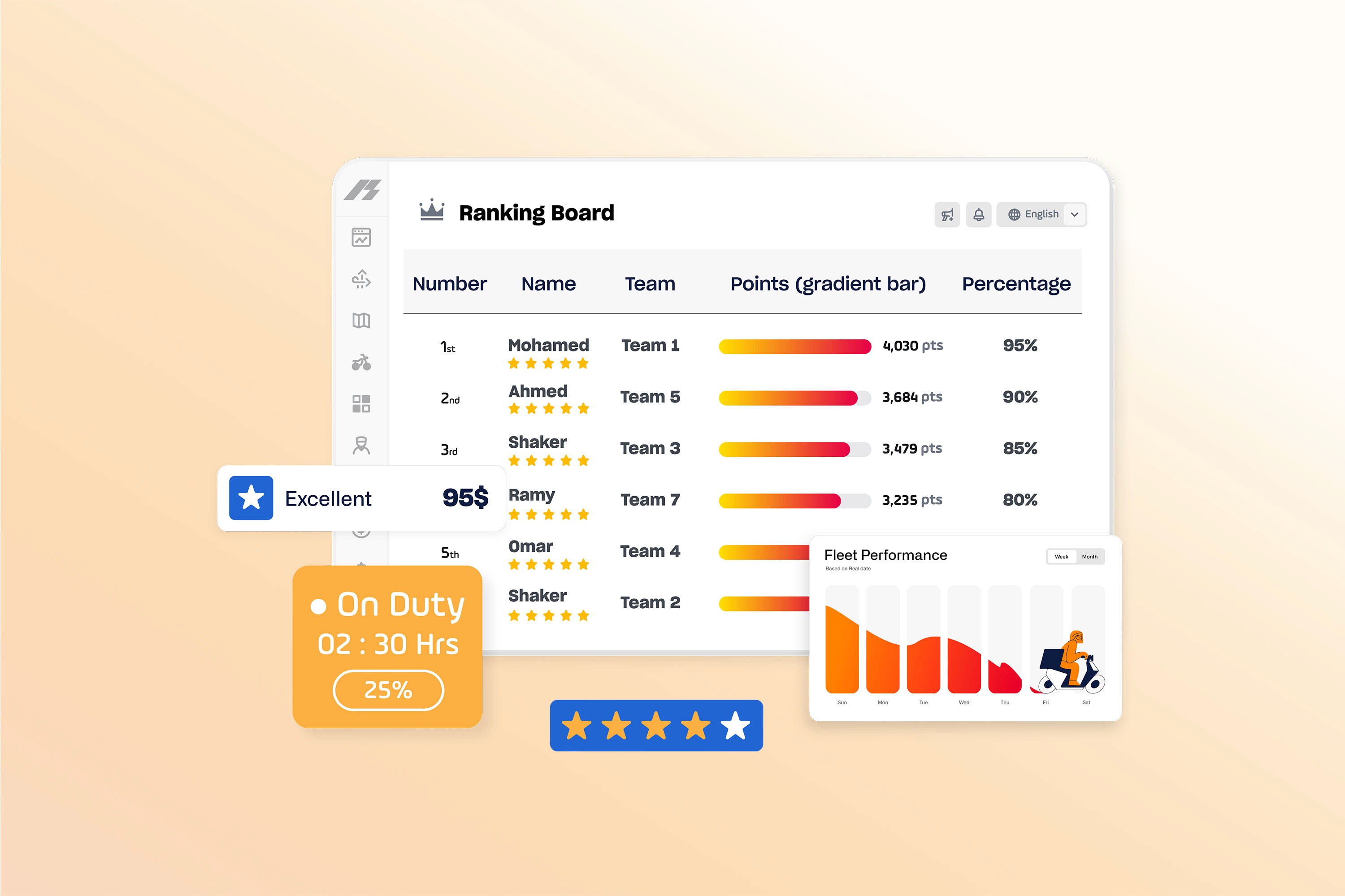
Effective food delivery fleet management relies on granular KPIs. Average delivery time is a starting metric, but breaking it down into preparation time, rider assignment time, pickup time, travel time, customer serving time, and return time reveals exactly where improvements can be made. Comparing these metrics across branches highlights operational discrepancies that might otherwise remain hidden.
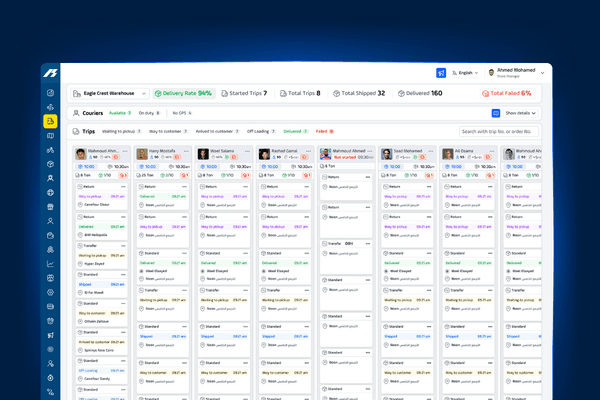
Roboost provides these breakdowns at the order, trip, rider, and branch level. Heatmaps show which areas generate the most returns. Root cause indicators distinguish between store-side delays and fleet-side delays. With this depth of data, food delivery fleet management becomes a continuous improvement process rather than a reactive firefighting exercise.
Frequently Asked Questions About Food Delivery Fleet Management
How does food delivery fleet management differ from general fleet management?
Food delivery fleet management must account for perishable products, temperature-sensitive grouping, tight delivery windows (typically under 45 minutes), kitchen preparation synchronization, and high-frequency orders during peak hours. General fleet management tools lack these food-specific capabilities.
Can food delivery fleet management handle both in-house and outsourced riders?
Yes. Roboost supports hybrid fleet models where you manage your own riders with full automation while simultaneously monitoring third-party delivery partner performance from the same dashboard.
How does food delivery fleet management prevent riders from overloading their trips?
Dynamic trip capacity settings enforce maximum orders per trip based on time windows and vehicle type. The rider app does not allow riders to accept orders beyond the configured limit, removing any possibility of manipulation.
What kind of cost savings does food delivery fleet management deliver?
Roboost clients typically achieve a 30% reduction in operations costs through optimized routing, reduced returns, automated dispatch (eliminating dispatcher roles), and fraud detection that catches fake deliveries and inflated payroll claims.